GZG
Vibrating Feeder
A high-capacity feeding solution engineered with self-synchronization technology to ensure stable, uniform material flow for large-scale industrial operations.
Hardcore Grading Solutions for Global Mining Operations
GZG Type Vibrating Feeder
Continuous and Quantified Feeding Across Diverse Industries
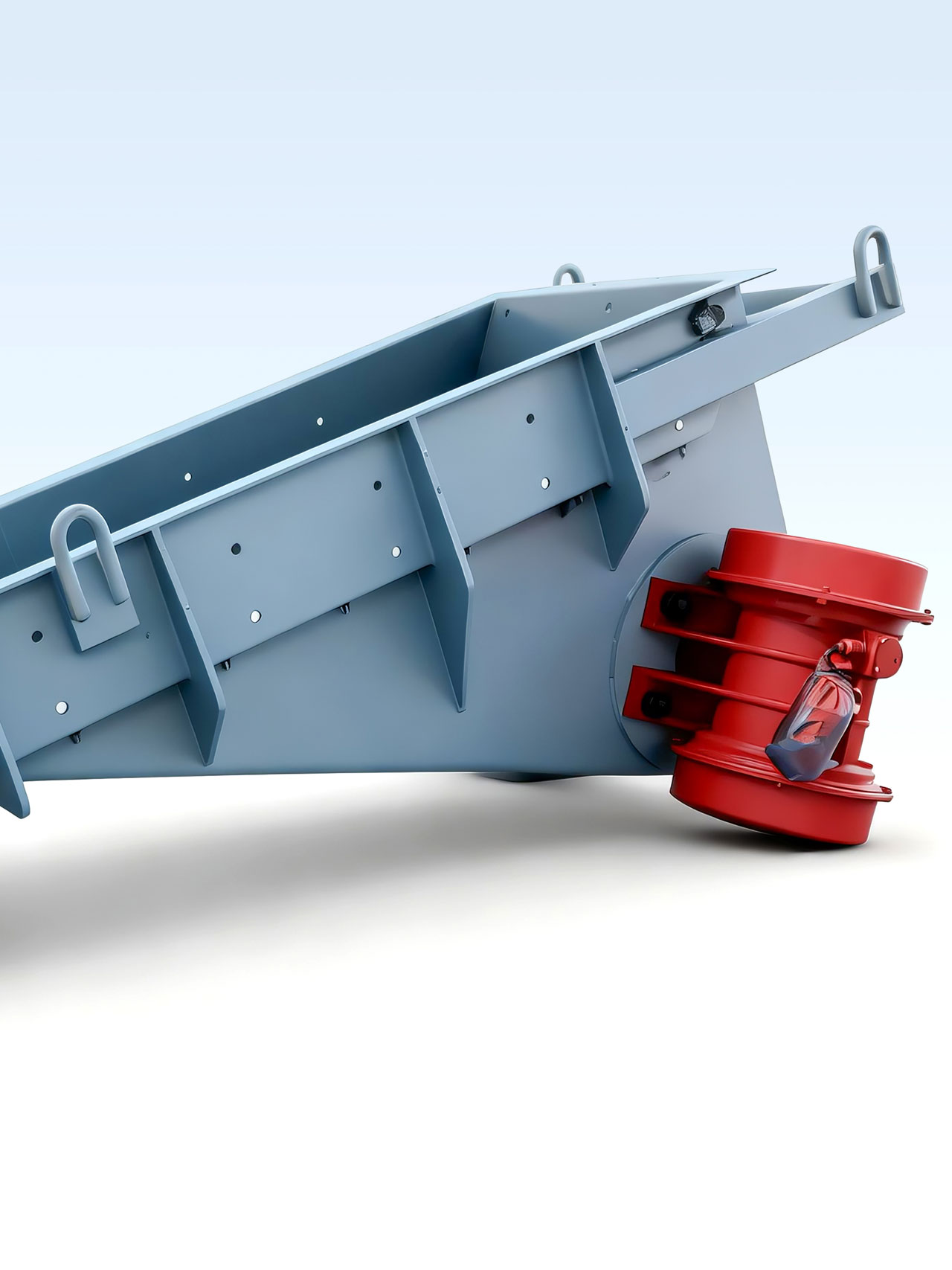
The GZG Type Vibrating Feeder is a premium solution engineered by UHM for the uniform, continuous, or quantified feeding of bulk materials. Utilizing advanced self-synchronizing inertial vibration principles, the equipment smoothly extracts lump, granular, and powder materials from storage bins or hoppers. As the critical initial link in automated production lines, it integrates seamlessly with downstream crushers, coal washers, screens, conveyors, and packaging machinery, providing a reliable material stream for the entire process circuit.
Structural Optimization & Flexible Motor Configurations
Through meticulous structural engineering of the trough and exciter mass, the GZG series achieves a lightweight and compact footprint while maintaining exceptional feeding capacities. It features highly stable operation, low power consumption, and superb adaptability to both abrasive and non-abrasive bulk materials. To overcome the increasingly tight space constraints of modern factories, UHM provides two versatile motor mounting configurations: the standard side-mounted drive arrangement and the space-optimized rear-mounted drive arrangement.
How Does It Work?
Dual-Motor Counter-Rotating Self-Synchronization
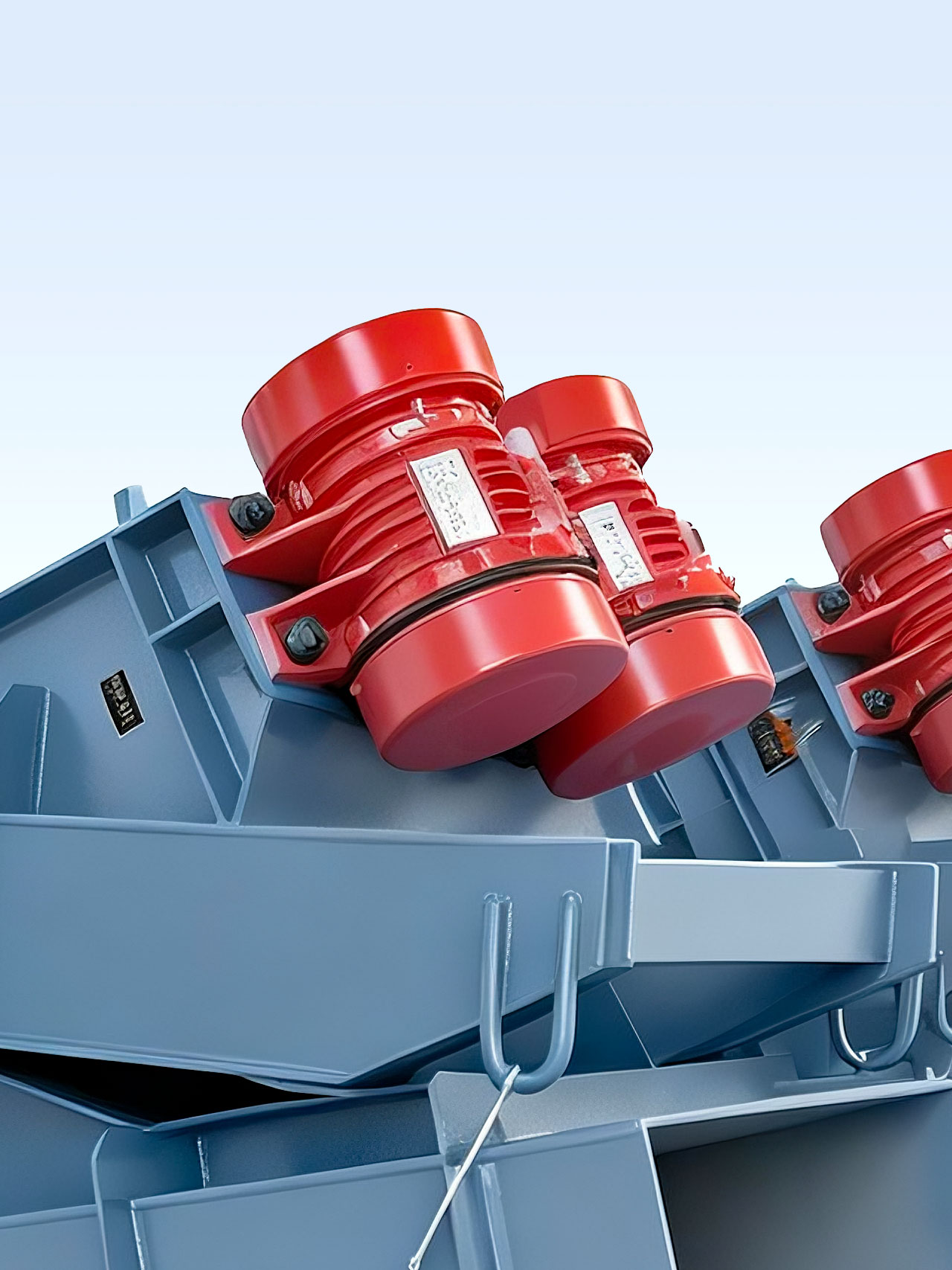
The driving force of the GZG series feeder originates from two symmetrically installed vibrating motors. Based on the principles of self-synchronization, when two identical motors rotate in opposite directions, the centrifugal excitation forces they generate cancel each other out along the transverse axis and superimpose along the longitudinal axis, creating a powerful linear resultant force. This linear excitation force drives the trough in a reciprocating linear motion, causing the material inside to leap forward continuously along a micro-parabolic trajectory. This mechanism delivers outstanding conveying efficiency while entirely preventing direct sliding abrasive wear between the material and the bottom of the trough.
Reverse-Current Braking & Resonance Zone Mitigation
Large, high-speed vibrating equipment is susceptible to destructive resonance amplification during shutdown sequences. To mitigate this risk, UHM equips every GZG feeder with an advanced reverse-current braking control enclosure as a standard feature. Upon receiving a stop command, the control system instantly applies a reverse braking torque, forcing the feeder to decelerate to a complete stop within seconds and pass through the resonance zone smoothly. This perfectly avoids excessive amplitude spikes that cause fatigue damage to the machine structure. The control enclosure features built-in electrical protections for overcurrent, overvoltage, and phase loss, and can be expanded with premium functionalities such as stepless VFD speed regulation, remote automation integration, and dual-rate (fast/slow) batch feeding controls.
What Are Its Uses?
Mining & Metallurgy: Heavy-Duty Primary Feed for Abrasive Run-of-Mine Lumps
In severe environments such as mining beneficiation plants and metallurgical blast furnace batching lines, the GZG series demonstrates extreme impact resistance and extended wear life. Typically installed directly beneath heavy run-of-mine hoppers, it continuously and uniformly feeds large chunks of iron ore, copper ore, gold ore, or hard quarried stone into primary jaw or cone crushers. For highly abrasive metallurgical materials like sinter, pellets, and coke, UHM can customize the trough interior with heavy-gauge manganese steel or ceramic wear-resistant liner plates. This architecture insulates the trough frame from direct gouging by high-density, abrasive solids, preventing material blockages and significantly extending the continuous operating cycles of the entire crushing circuit.
Coal & Power Generation: Flow Regulation for Coal Washing & Boiler Blending Circuits
As the primary “artery regulator” of fuel handling systems in coal preparation plants and thermal power facilities, the GZG series plays a decisive role in coal classification and automated blending processes. It easily handles the extraction of wet fine coal, clean coal, or raw run-of-mine coal from storage silos. Utilizing variable frequency controllers (VFDs), operators can adjust the feeder’s discharge velocity steplessly to match the real-time load of downstream coal washers, such as jigs and heavy-media cyclones. In power plant boiler blending systems, multiple rear-mounted GZG feeders can run in parallel, discharging different grades of coal according to strict caloric ratios into the pulverizers, thereby securing peak combustion efficiency and long-term boiler safety.
Building Materials & Chemicals: Total Enclosure & Containment for Fine Powders & Corrosive Solids
In building materials, cement production, and fine chemical processing, materials frequently transform into delicate powders (e.g., gypsum powder, cement clinker, titanium dioxide) or highly corrosive chemical granules. In these applications, the GZG series introduces a fully enclosed trough architecture combined with flexible canvas or rubber sleeve connections at the inlet and outlet chutes, creating a totally dust-tight material channel. This completely eliminates the escape of high-dust fine particles during vibratory conveying, drastically improving workshop air quality and shielding hydroscopic or sensitive compounds from ambient moisture contamination. For food-grade, pharmaceutical, or highly acidic/alkaline solids, UHM manufactures the entire assembly from high-grade polished stainless steel to guarantee zero contamination and exceptional corrosion resistance.
Grain & Light Industry: Velocity Calibration & Dynamic Stream Splitting Prior to Packaging
In grain processing lines (such as the storage, transport, and drying of wheat, corn, and soybeans) and light manufacturing, processes demand rigorous stability and rapid dynamic flow responses. Thanks to its low stroke amplitude and high-frequency vibration of up to 1450 cycles per minute, the GZG feeder fluidizes light grains into a perfectly uniform, steady-moving material bed. Positioned at the inlet of automated multi-head weighers or optical color sorters, the GZG feeder responds to system feedback signals within a single second to adjust the feed rate, executing fast and slow dual-phase precision dosing. This sharply improves final packaging accuracy and sorting efficiency while eliminating line fluctuations caused by material surging or starvation.
FAQ & VOTERS
What are the rigid environmental and electrical operating constraints for the GZG series?
The standard equipment package is designed for environments where the ambient temperature does not exceed +40℃ and the relative humidity remains below 85% (at 20±5℃). The surrounding area must be free of explosive hazards, severe chemical corrosion, or conductive dust that could compromise electrical insulation. For high-risk, classified, or chemical plant layouts, UHM supplies custom explosion-proof motors and specialized stainless-steel corrosion-resistant alloys.
Does the rear-mounted motor design reduce feeding capacity or compromise structural stability?
Absolutely not. The rear-mounted configuration is mechanically and performance-identical to the side-mounted design, utilizing the exact same kinetic vectors. This architectural variant was developed exclusively to solve geometric footprint constraints. When the space on either side of the storage bunker discharge gate is too narrow to accommodate projecting motors, the rear-mounted configuration is the ideal solution to optimize factory space utilization.
How can we maintain strict dosing accuracy during long-term continuous production campaigns?
High-precision feeding consistency depends on two engineering audits: First, plant maintenance must periodically check the tightening torque of the eccentric counterweights on both vibrating motors to ensure they maintain strict, counter-rotating self-synchronization. Second, the initial installation must be verified to ensure the hopper chute’s rear plate is absorbing the static material column load. As long as the feeder tray is isolated from compressive external forces, the feed rate governed by the VFD will maintain exceptional long-term linear consistency.