High-Temperature Thermal Transport & Advanced Air-lock Solutiong Solution
SZF
Inertial Vibrating Hot Material Conveyor
UHM’s SZF inertial vibrating conveyors handle hot materials up to 500°C. Featuring a dust-tight air-lock design, low energy consumption, and high wear resistance for cement and metallurgy.

High-Performance Transport for Extreme Temperatures
SZF Inertial Vibrating Hot Material Conveyor
Efficient Handling of 500°C Thermal Materials
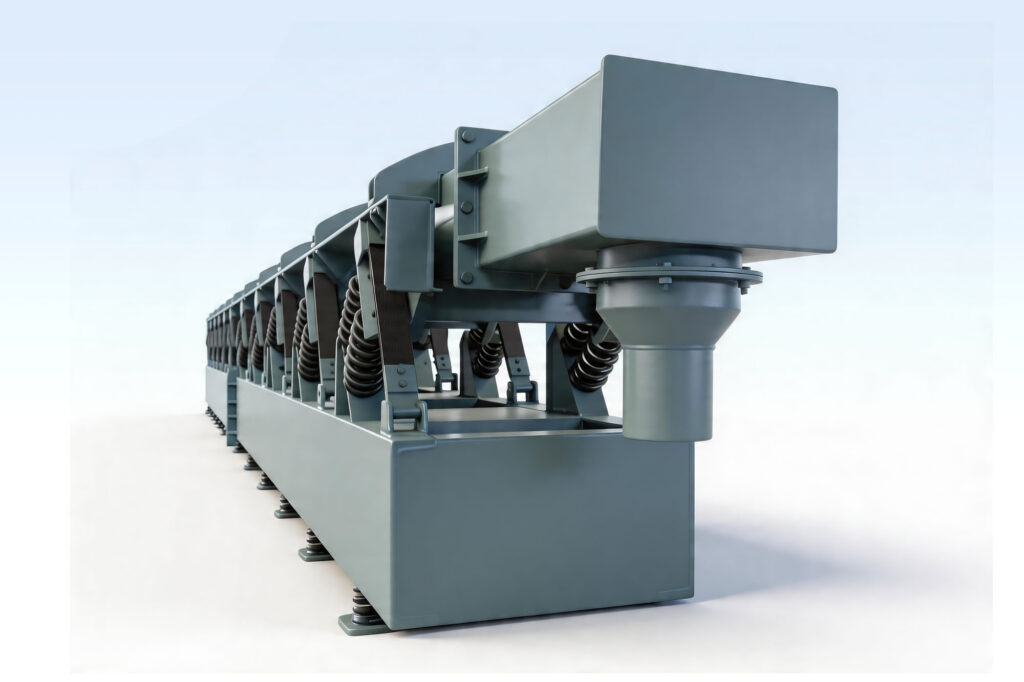
The SZF Inertial Vibrating Hot Material Conveyor is a specialized long-distance transport system engineered for bulk solids under extreme thermal conditions. Capable of handling materials with temperatures up to 500°C, it is the industry benchmark for moving highly abrasive and hot substances such as hot mineral slag and cement clinker. Beyond transport, the SZF model integrates a specialized air-lock function, effectively maintaining system pressure and preventing air leakage in complex process chains.
Shared Technology with the Vibrating Conveyor Family
As a core member of our vibrating equipment lineup, the SZF model shares its technological DNA with the PSL, DSL, and SSL series. While the drive mechanism differs, all these models utilize the “non-friction” conveying logic. Compared to the link-driven DSL or PSL models, the SZF focuses more on thermal stability and structural compactness, providing the most reliable thermal connection between kilns, coolers, and storage silos.
Note: The SZF series is engineered for thermal stability; unlike traditional conveyors, it requires no thermal state adjustments when transitioning between cold and high-temperature material loads.

How Does It Work?
Self-Synchronized Inertial Drive System
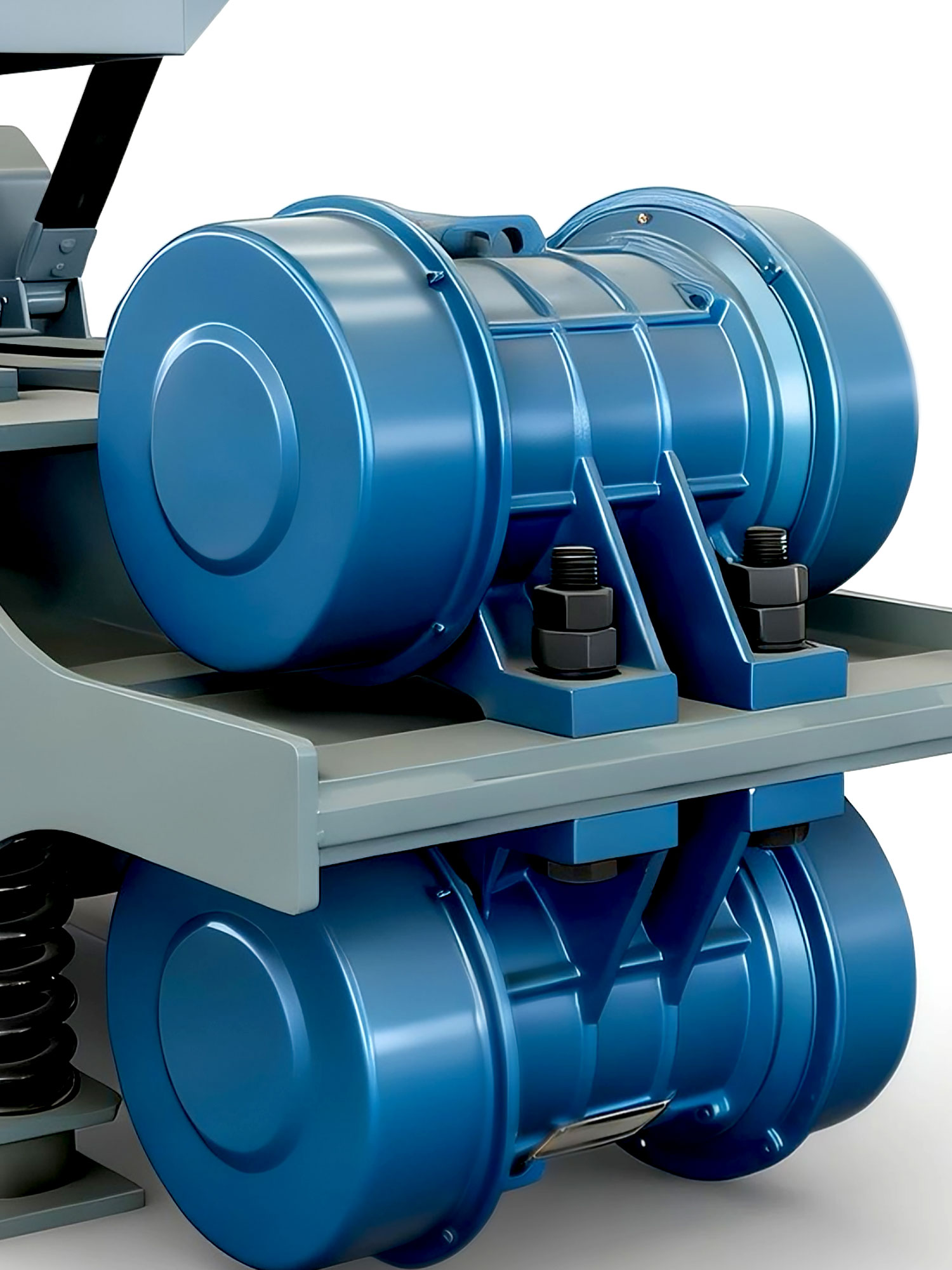
The SZF conveyor utilizes a pair of inertial vibration motors to generate synchronized linear vibration. This drive system eliminates the mechanical linkages found in the DSL/PSL models, resulting in a more streamlined structure with fewer maintenance points. The vibration is transmitted directly to the reinforced heat-resistant trough, causing the material to move in a controlled, continuous stream.
Consistent Parabolic Trajectory
Despite the different drive source, the SZF model employs the signature parabolic tossing trajectory found across our entire vibrating conveyor range. Materials “hop” forward rather than sliding along the trough bottom. This mechanism, identical to the PSL and DSL models, minimizes physical wear on the trough and ensures that fragile materials are not degraded during high-temperature transport.
Note: This “tossing” mechanism is the secret to the equipment’s longevity. For abrasive materials like hot slag, the trough lifespan is typically 3 times longer than that of conventional screw conveyors.
What Are Its Uses?
Optimized for Cement, Slag, and Metallurgy
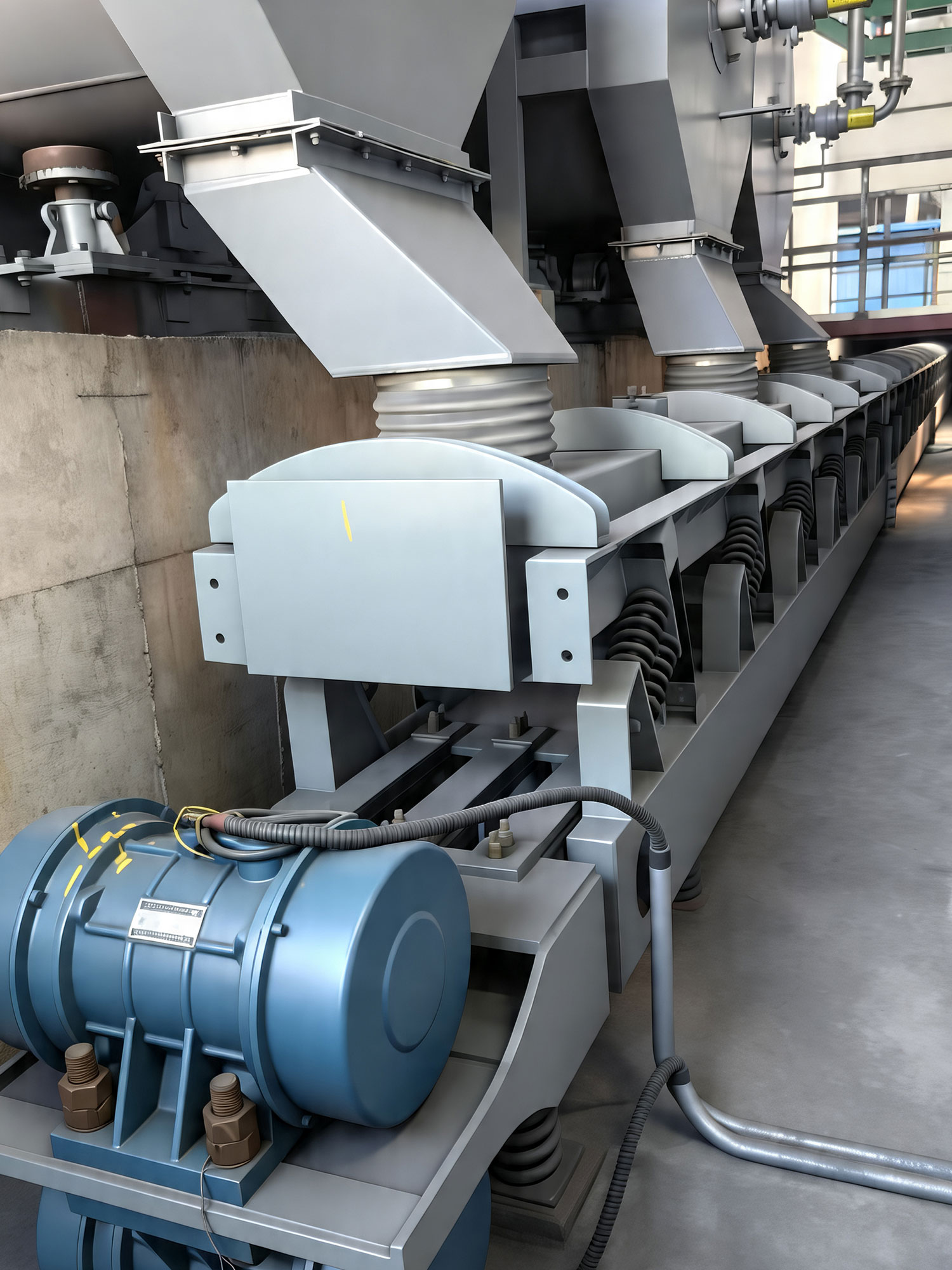
The SZF conveyor excels in handling materials that cause thermal fatigue in standard equipment. Like its “sibling,” the PSL Fully Balanced model, the SZF supports multi-point loading/discharge and a fully enclosed structure. This ensures a clean, dust-free environment when handling volatile materials like carbon powder or fly ash, meeting strict environmental compliance.
Selection Guide: SZF, DSL, or PSL?
- High-Temp/Air-lock Needs: Choose the SZF model for its superior thermal expansion handling and integrated air-lock effect.
- Long Distance & Max Energy Savings: Choose the DSL (Single-Mass) or PSL (Balanced) link-driven models for better energy efficiency over long spans.
- Vibration-Sensitive Environments: If installing on steel platforms, choose the PSL Balanced model or the highly-isolated SZF model.
Note: All our vibrating conveyors (SZF/PSL/DSL) feature a “no-wear-parts” design (no belts or scrapers), and lubrication points never touch the material. This ensures 24/7 continuous operation with zero contamination.
FAQ & VOTERS
What is the primary maintenance difference between the SZF and DSL/PSL series?
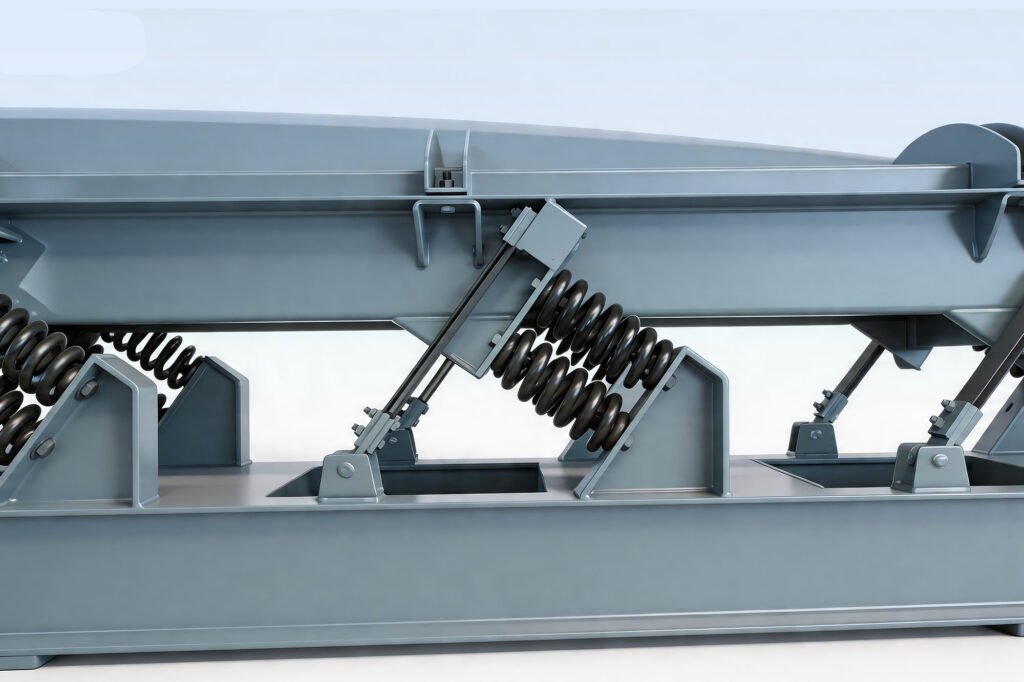
Since all belong to the vibrating category, maintenance is minimal for all. The SZF uses motor-driven inertial synchronization, whereas the DSL/PSL uses mechanical links. For all models, maintenance focuses on checking the integrity of isolation springs and ensuring bolts are tightened, rather than replacing internal wear components.
How does the SZF handle thermal expansion at 500°C?
The machine is engineered with thermal expansion joints and a floating support system. This allows the trough to expand and contract freely without stressing the drive motors or the foundation. This “no-adjustment” feature is a significant advantage over traditional drag chain conveyors in cement plants.
Can the SZF be used as a discharge feeder?
Yes. One of the SZF’s unique advantages is its air-lock capability when used as a horizontal discharge unit under a silo. This is a specific functional advantage over the DSL/PSL link-driven series, which are primarily designed for pure transport rather than pressure isolation.
Note: When used as an air-lock feeder, the SZF model’s unique sealing efficiency makes it indispensable for kiln-bottom or silo-bottom discharging where pressure stability is mandatory.