DMA
Vibrating Feeder
A precision-controlled electromagnetic feeder designed for applications requiring instantaneous flow regulation and high-accuracy material batching.
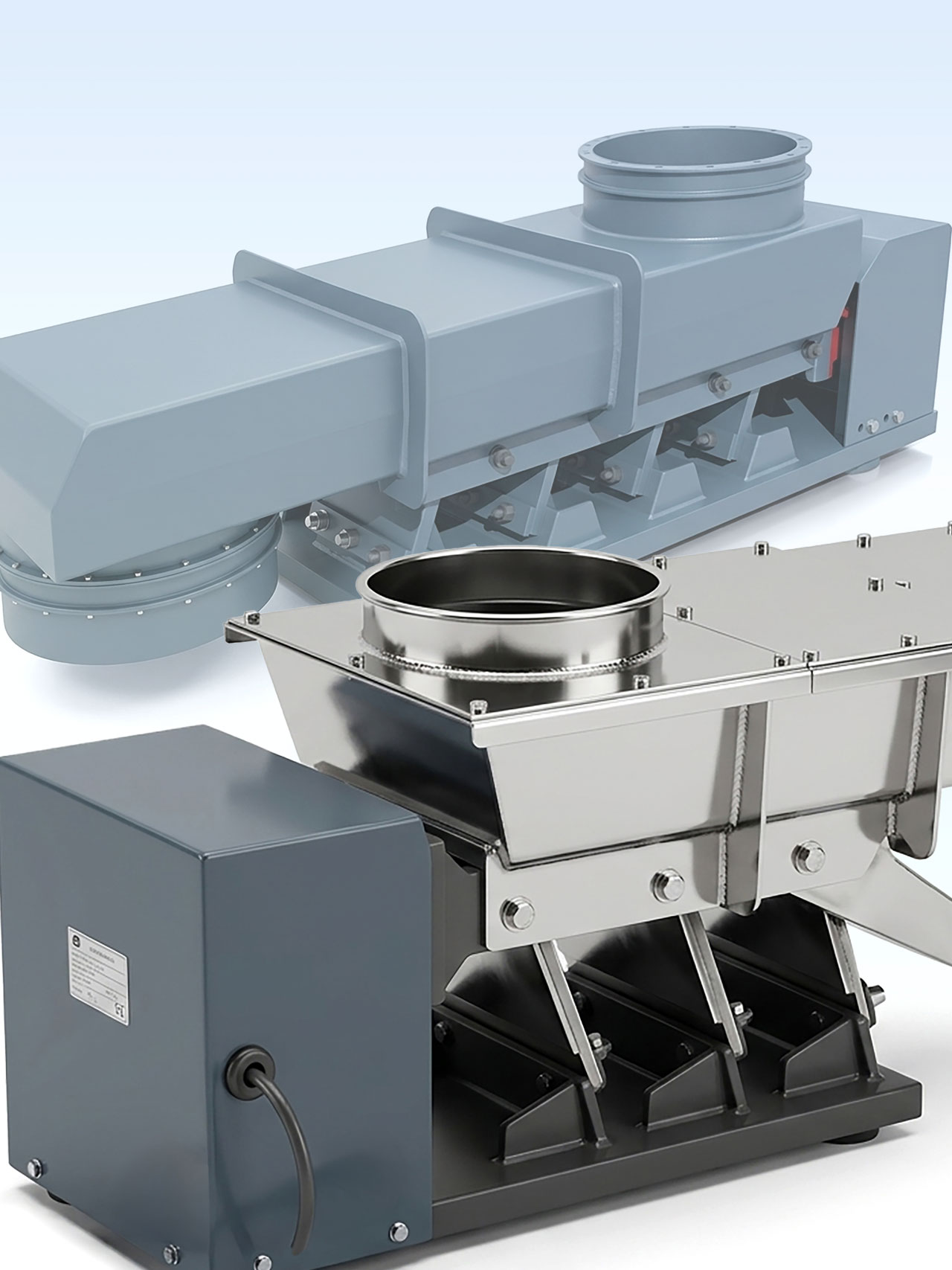
Precision Feeder
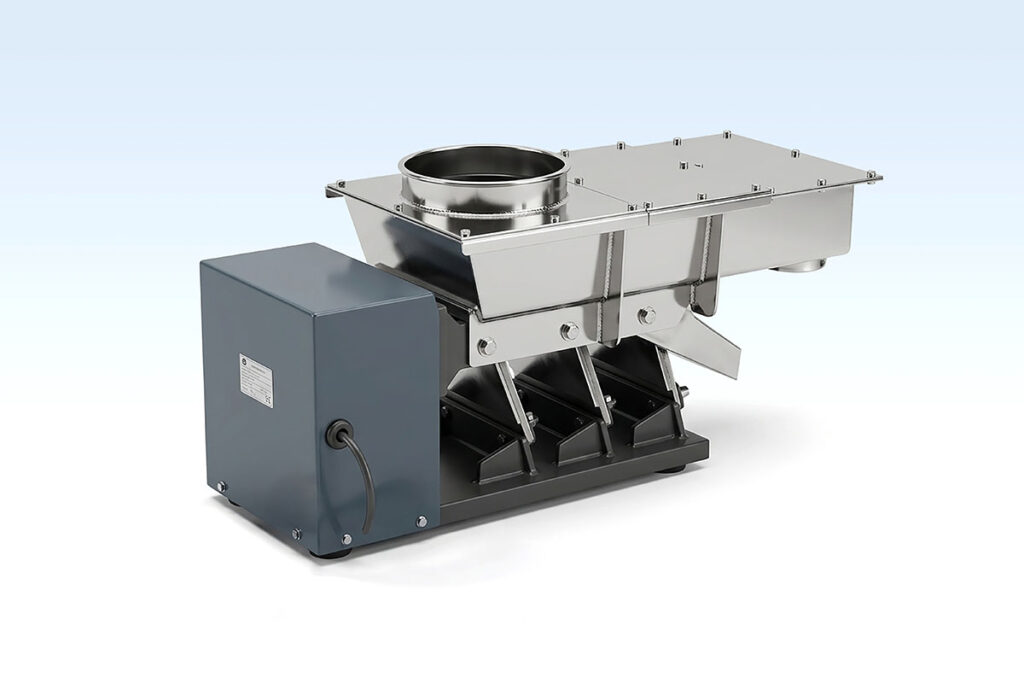
DMA Type Vibrating Feeder
Micro-Dosing and High-Accuracy Quantified Feeding Control
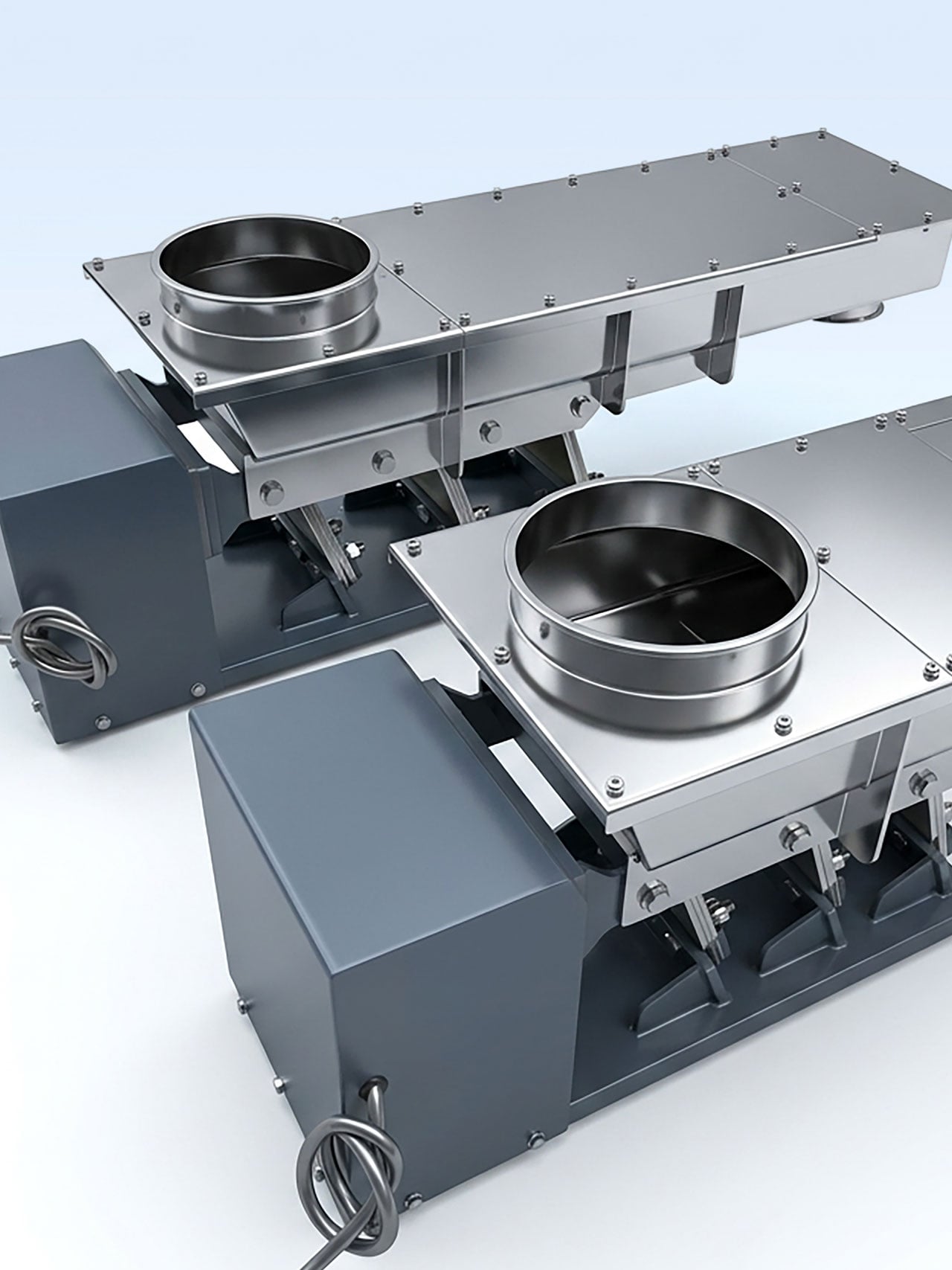
The DMA Type Vibrating Feeder is a premium micro-flow regulation apparatus engineered by UHM, specifically developed for industrial processes that demand extreme dosing precision. Unlike heavy-duty aggregate movers, the DMA series is tailored to transfer granular and powdered materials into receiving systems with absolute uniformity and continuity. This makes it an irreplaceable core component in automatic batching, precision ingredient blending, quantitative packaging, and highly automated process control loops where even minor fluctuations in material velocity can compromise final product formulations.
Compact, Non-Frictional Engineering and Lubrication-Free Operations
Architecturally, the DMA series exhibits a highly rational, compact layout that delivers unique operational advantages. Because the unit generates vibration through a stationary electromagnetic coil rather than a rotating mechanical motor, the entire machine has a lighter deadweight and experiences minimal center-of-gravity displacement during startup cycles. The system features zero rotating or sliding transmission parts, which eliminates mechanical friction entirely. Consequently, plant operators save significant operational costs because the unit requires absolutely no lubrication or routine bearing maintenance over its entire lifecycle.
How Does It Work?
Electromagnetic Coil Excitation and Spring-Mass Resonance Dynamics
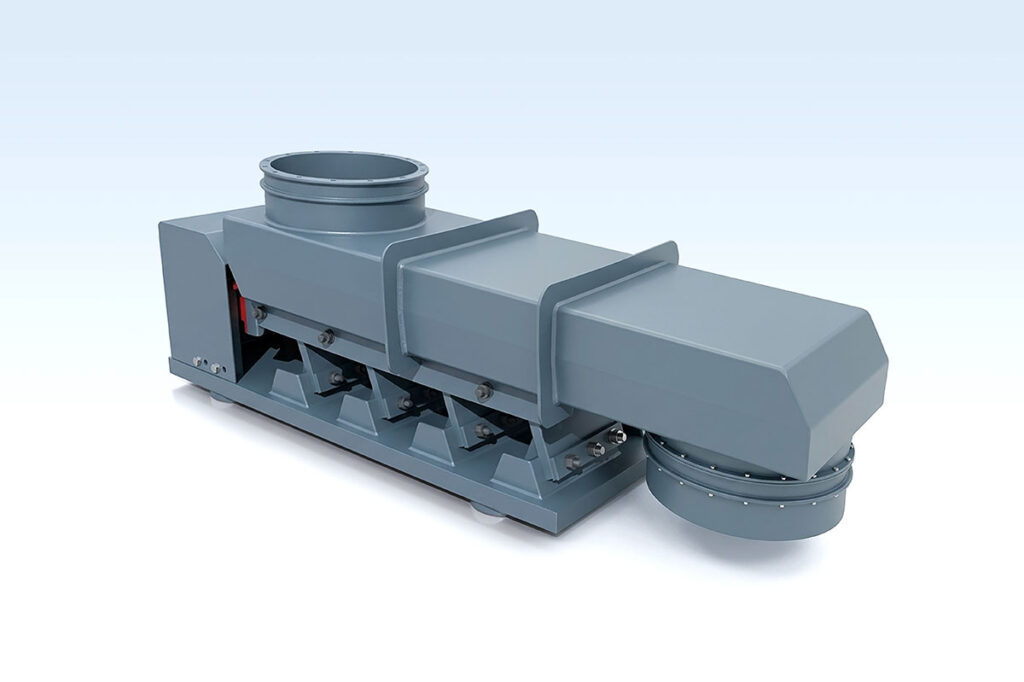
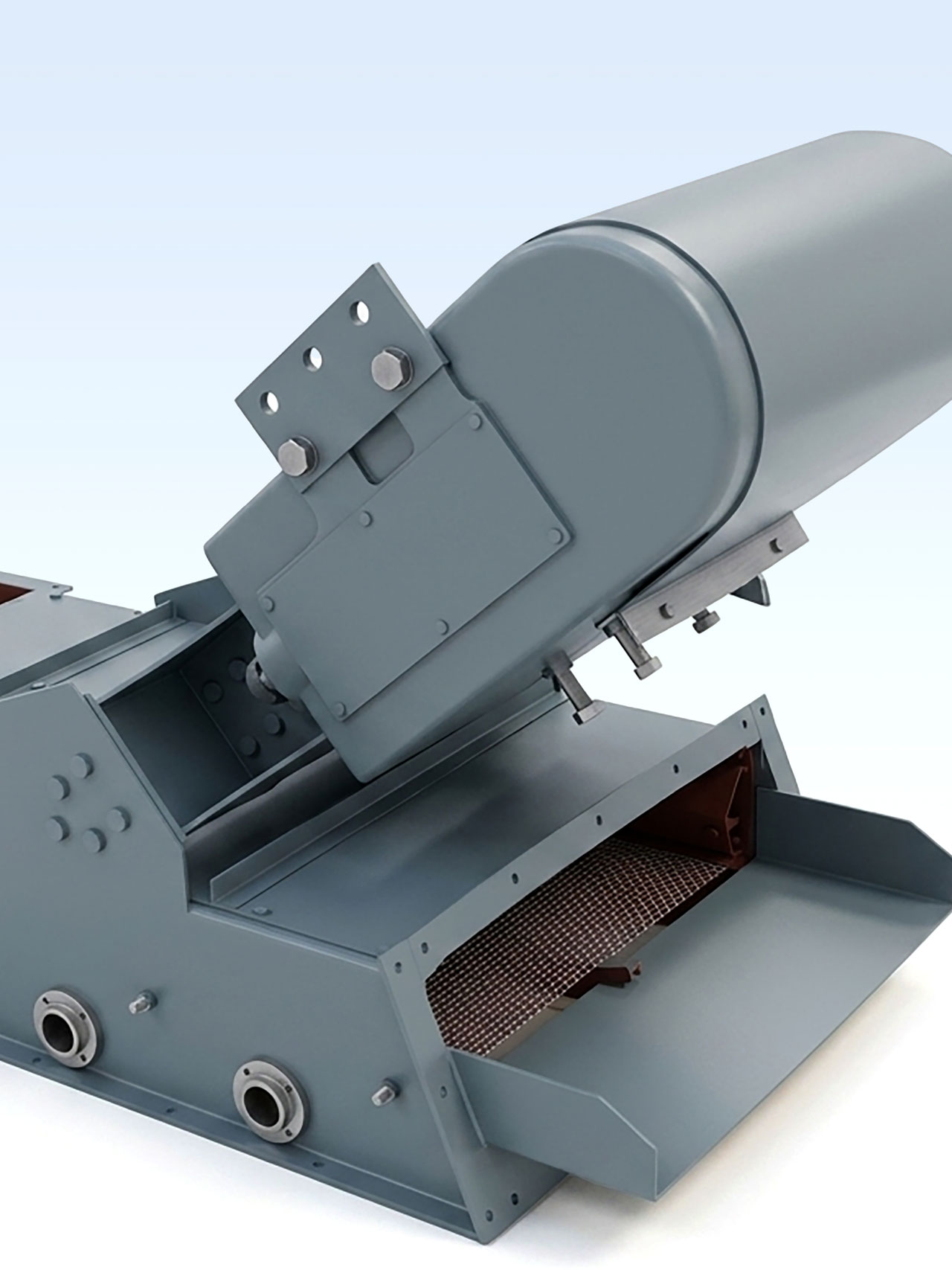
The driving force of the DMA series relies on a specialized electromagnetic exciter assembly combined with integrated leaf-spring matrices. When AC electricity passes through the internal control box, it is converted into a half-wave rectified current that flows into the electromagnetic coil, creating a high-frequency, alternating magnetic attraction force. This magnetic pulse repeatedly pulls the armature assembly forward against the mechanical resistance of the leaf springs, releasing it immediately as the current wave cycles down. This electrical sequence creates a highly stable, high-frequency linear vibration (50 Hz or 3000 cycles/min ) operating near the natural resonance point of the spring-mass system, generating exceptional material movement while consuming minimal electrical energy.
Micro-Amplitude Stepless Regulation and Parabolic Tray Protection
This high-frequency resonance drive generates a highly controlled, precise double-amplitude stroke ranging from 1.5 mm to 1.75 mm.
- Micro-Parabolic Trajectory: Under the influence of this high-frequency, micro-amplitude impulse, individual particles inside the tray do not slide across the metal surface. Instead, they fluidize and advance through rapid, microscopic parabolic leaps. This non-sliding movement minimizes abrasive friction against the feeder tray, extending equipment life when handling micro-abrasive solids. (⚠️ Engineering Boundary Warning: The DMA series relies on specialized electromagnetic coil insulations and is strictly not suitable for handling hot materials exceeding 300°C, nor should it be deployed in environments with specialized explosion-proof rating requirements.)
- Stepless Flow Adjustment: By pairing the feeder with our standard matching electronic control box (ranging from XKZ-5G2 to XKZ-40G3), operators can smoothly adjust the excitation voltage and current via a centralized automation system or local interface. This enables instant, stepless throttling of the volumetric feed volume to maintain excellent dosing accuracy.
What Are Its Uses?
Chemical & Building Materials: Precise Volumetric Feeding of Fine Catalyst Powders
In fine chemical processing, cement blending, and advanced building material lines, ingredients must be mixed according to strict stoichiometric ratios. The DMA series handles delicate powder transfers—such as gypsum, additives, or titanium dioxide—without causing line surges. By integrating the feeder with electronic weigh-hoppers, the DMA unit dynamically tracks material weight and micro-throttles the feed rate in real time, delivering a uniform, dust-tight stream that prevents batch contamination or additive over-dosing.
Grain & Light Manufacturing: High-Speed Response Ahead of Quantitative Packaging Scales
In automated food processing and grain packaging facilities handling materials like wheat, corn, sugar, or coffee beans, feeding systems must deliver rapid control responses. The high-frequency drive of the DMA series permits instantaneous starts and stops with zero mechanical overrun or inertia delay. Positioned upstream of automated multi-head packaging scales or sorting machinery, the DMA feeder toggles instantly between fast and slow feeding phases, maximizing packaging speeds while maintaining exceptional product weight accuracy.
Metallurgy, Coal, & Power: Consistent Micro-Dosing of Additives and Fuel Pulverules
Within power generation facilities, metallurgical smelting loops, and coal processing plants, the DMA series acts as an essential micro-dosing regulator. It handles the uniform extraction of fine coal dust, pulverized coke, or chemical binders from storage hoppers. Its compact footprint enables easy installation into tight structural spaces underneath large silos, ensuring downstream mixers or combustion burners receive a continuous, uninterrupted stream of processed material.
FAQ & VOTERS
How are the nominal throughput ratings of the DMA series calibrated, and how should operators adjust for different material densities?
All nominal capacity ratings across the DMA portfolio (spanning from the compact DMA2 rated at 2.5 t/h up to the heavy industrial DMA250 rated at 320 t/h are calibrated using river sand with a bulk density of 1.6 t/m3 and a moisture content of 30% as the reference baseline. When designing your process line for low-density solids like grain or coal powder, or high-density mineral concentrates, engineers must recalculate the true volumetric throughput by multiplying the baseline rating by the actual material density ratio to avoid line starvation or over-filling.
Why is it critical to keep the DMA series isolated from direct vertical hopper weight or bin pressure?
The DMA series utilizes a highly tuned spring-mass resonance system designed exclusively for high-frequency, micro-amplitude material transport. If a storage bin chute is improperly designed, allowing the deadweight of the entire material column to compress the tray, the leaf springs will deflect beyond their design limits, throwing the unit out of electrical resonance. This causes a dramatic drop in amplitude, overheating of the electromagnetic coil, and a complete loss of feed control. To prevent this, plant designs must integrate a static shelf or a sloped baffle plate inside the hopper chute to absorb the static material pressure, ensuring the feeder tray only handles loose, active material.
What are the primary indicators that the leaf-spring matrix needs adjustment or replacement?
During long-term continuous production, if you notice the material feed velocity decreasing even though the control box current remains at maximum, the unit has likely drifted away from its resonant frequency. This occurs when the high-tensile steel leaf springs stretch or develop micro-fatigue cracks over time. Maintenance teams should routinely verify that all leaf-spring compression bolts are tightened to factory specifications. If a spring plate shows visible cracking or fails to respond to tuning, the entire spring stack should be replaced to restore the optimal 1.5 mm~1.75 mm operating amplitude.