ZSW
Vibrating Sifting Feeder
A rugged, heavy-duty grizzly feeder engineered for primary processing stages, delivering high-impact resistance and superior pre-screening efficiency.
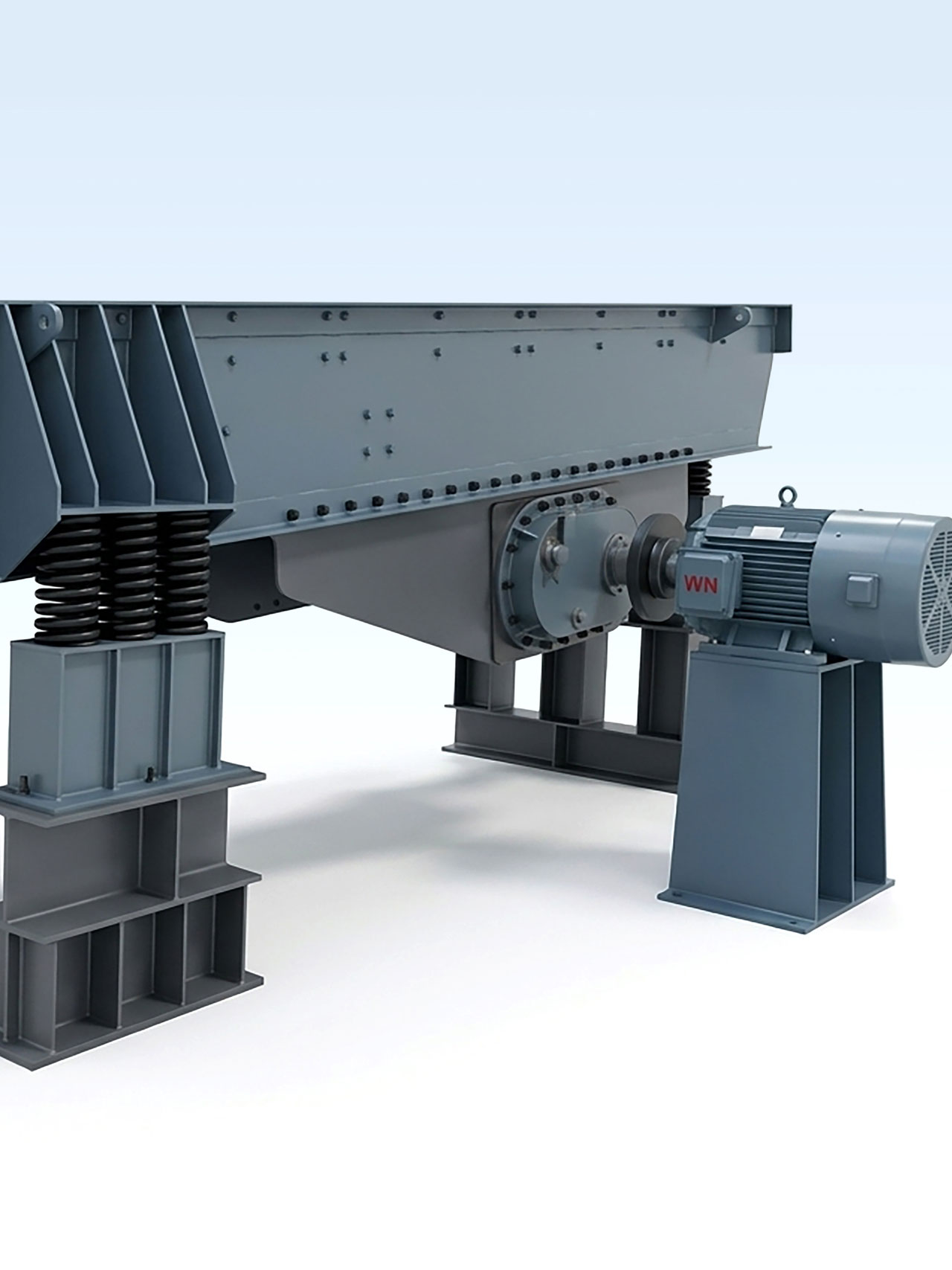
Heavy-Duty Box Feeder
ZSW Type Vibrating Sifting Feeder
Dual-Gear Transmission Exciter Box Built for Hard and Highly Abrasive Materials
The ZSW Type Vibrating Sifting Feeder is a premium primary feeding apparatus custom-engineered by UHM for the most severe operating environments in large-scale mines and centralized aggregate production lines. Unlike the [GZD Type Vibrating Sifting Feeder], which is driven by standard vibratory motors, the ZSW series upgrades to an independent exciter box architecture powered by two heavy-duty eccentric shafts forced into synchronization by high-precision paired gears. This core engineering advancement provides significantly higher grizzly structural strength, outstanding wear resistance, and an ultra-rigid chassis, enabling the system to effortlessly handle continuous heavy-duty processing of hard, highly abrasive, and large Run-of-Mine (ROM) ores while supplying a continuous, uniform, and remarkably stable base material flow to large primary jaw crushers.
Low Installation Height and a Solid Machine Frame with Exceptional Impact Resistance
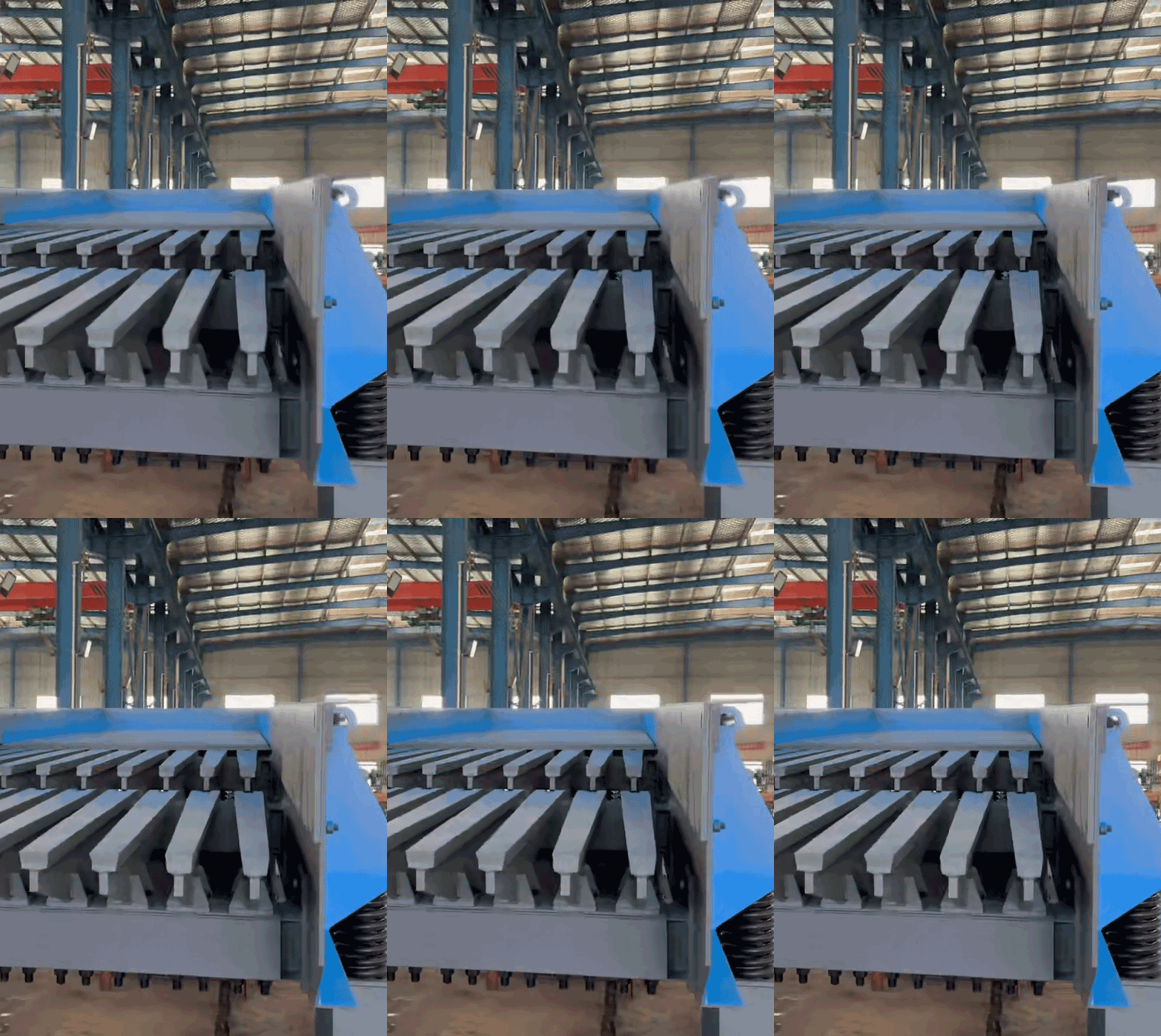
The structural engineering of this series showcases ultimate industrial rigidity. The main casing is welded from heavy-gauge boiler steel plates and structural reinforcement ribs, easily absorbing the multi-ton impacts of giant boulders dumped directly from heavy mining trucks or large-capacity storage hoppers. Concurrently, the entire machine integrates a low-profile space-saving design, delivering the critical benefit of a low overall installation height, which allows for highly flexible deployment inside height-restricted underground bunkers or mobile crushing stations. The forward discharge section features a high-strength specialized grizzly bar layout that forcefully strips out soils, manufactured sand, and fine gravel fractions during high-energy feeding, serving as the ideal primary scalping pioneer for the entire crushing and screening circuit.
How Does It Work?
Dual-Shaft Gear Synchronization and Forced Linear Vibration Mechanism
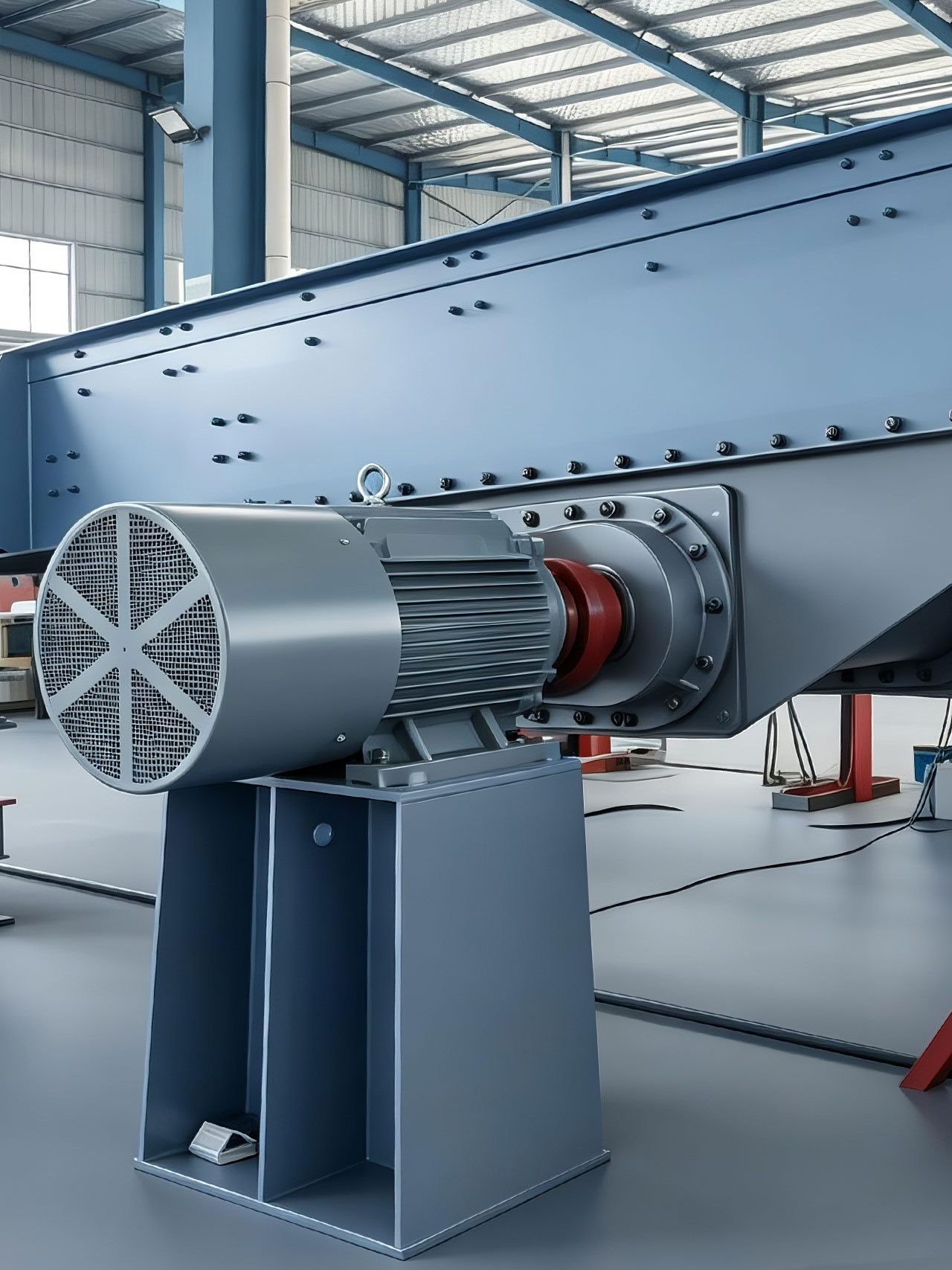
The ZSW series feeder moves away from standard motor-vibrated configurations, drawing its power instead from a standard high-power electric motor that drives the driving and driven eccentric shafts inside the exciter box via a heavy belt pulley. These two heavy-duty eccentric shafts are forced into absolute reverse-synchronization by a pair of precision-meshing gears. Consequently, the centrifugal inertial forces generated by the rotation of the twin shafts automatically cancel each other out along the horizontal axis, while overlapping and concentrating in the direction perpendicular to the exciter box axis. This generates a definitive, highly stable, and powerful directional linear excitation force, compelling the entire feeder trough to execute a continuous, high-frequency reciprocating linear motion.
Zero-Degree Horizontal Spreading, Fluidization, and Pre-Screening Bypass Circuit
The high-frequency reciprocating linear vibration of the trough applies continuous upward tossing kinetic energy to the thick mineral bed, causing large rocks to advance through micro-parabolic leaps.
High-Rigidity Grizzly Separation: As the stratified material bed advances to the specialized high-strength alloy grizzly zone, the bottom-layer gravel, soils, and fine sand rapidly drop through the high-wear grizzly gaps into a sub-level collection belt, bypassing the primary crusher completely. Meanwhile, clean, oversized top-layer rocks bridge across the bar tops and slide smoothly into the primary crusher intake. This operational loop optimizes screening efficiency to meet strict process criteria and completely prevents material choking or motor jamming inside the primary crushing cavity.
Zero-Degree Horizontal Advance: In contrast to the [GZD Series Vibrating Feeder], which often relies on a downward slope to accelerate material velocity, the ZSW series is typically installed horizontally at a 0° incline. Materials rely entirely on the powerful linear excitation force to spread out, flatten, and fluidize across the horizontal plane. This extends material retention time on the tray, resulting in complete size stratification where fine fractions settle to the bottom and large rocks float to the top.
What Are Its Uses?
Million-Tonnage Manufactured Sand & Aggregate Plants: High-Energy Impact Absorption for Direct Truck Dumping
In modern, high-capacity aggregate centers where daily throughput scales up to tens of thousands of tons, raw minerals are typically dumped directly into receiving hoppers by heavy tipping trucks. The ZSW series is deployed as the heavy-duty gatekeeper at the very head of the circuit, relying on its reinforced casing and box-exciter chassis to withstand the destructive gravitational impacts of falling boulders. It uniformly meters giant boulders of basalt, granite, or limestone (measuring 500mm to over 1000mm) into large jaw crushers while simultaneously utilizing its high-rigidity grizzly bars to strip away surface clay and fines, thoroughly purifying the feed material entering the primary crusher.
Large-Scale Non-Ferrous Beneficiation Plants: Continuous Feeding of Hard, Highly Abrasive Base Ores
In the primary crushing circuits of iron, copper, or gold mines, intense abrasiveness poses the ultimate challenge to material handling equipment. The box-exciter bearings of the ZSW series utilize long-life, heavy-duty specialized bearings paired with high-efficiency oil-bath or heavy grease lubrication systems. Compared to the motor-driven [GZD Type Vibrating Sifting Feeder], the ZSW series offers significantly larger feeding capacities and ultra-long continuous operational cycles, ensuring zero power attenuation and eliminating structural fatigue cracking even under non-stop, year-round bin extraction campaigns.
Industrial Solid Waste & Steel Slag Recovery Lines: Dry Pre-Sorting Under Severe Impact Conditions
In large-scale steel mill slag recycling and demolition waste processing lines, raw materials are highly irregular and heavily contaminated with structural rebar, large scrap metal pieces, and heavy chunks of slag. The horizontal layout of the ZSW vibrating feeder allows it to break apart and straighten out these challenging, entangled streams using purely high-frequency tossing forces without needing gravitational slope assistance. Small slag particles, dirt, and oxide scales drop through the high-strength steel grizzly section early on, preventing them from entering downstream fine crushers as deadweight abrasive fractions, which drastically improves the front-end sorting efficiency of metal recovery lines.
FAQ & VOTERS
What are the fundamental differences in architecture and application between the ZSW box-exciter feeder and the GZD motor-driven feeder?
The key differences lie in the drive mechanism and structural impact resistance. The [GZD Series Vibrating Feeder] is vibrated by two attached motors shaking themselves, resulting in a lighter deadweight that is ideal for handling small-to-medium particle sizes (300-600mm) and processing capacities around 100-200 tons per hour, usually requiring a small downward slope (0-10°) to assist material movement. Conversely, the ZSW Series Vibrating Feeder relies on an independent, heavy-duty exciter box with synchronized transmission gears. It delivers massive kinetic force and features an extremely heavy structure (with maximum configurations reaching 11 tons), custom-built for giant 500-1000mm ROM boulders and high-tonnage mining lines processing 100-800 tons per hour. The ZSW feeds materials horizontally at 0° using pure linear force, operating on a completely different level of wear and impact resistance.
Since the ZSW series exciter box features internal dual-gear synchronization, what are the strict requirements for maintenance and lubrication?
The synchronized timing gears and eccentric shaft bearings inside the exciter box represent the heart of the machine, operating under continuous high-frequency, heavy-load conditions that demand strict lubrication discipline. Operators must complete routine oil-level checks and change the specialized heavy-duty gear oil or high-viscosity grease at factory-specified intervals. If oil weeping is detected near the exciter seals, or if the unit emits an unusual metallic noise during operation, the machine must be stopped immediately to prevent gear wear from throwing the twin shafts out of sync. If the eccentric shafts lose synchronization, the directional linear excitation force transforms into a destructive, chaotic twisting force that can crack the entire steel trough assembly within a few days.
Why is a horizontal 0° installation strongly recommended for the ZSW series, and can the grizzly bar spacing be adjusted to match varying processes?
A horizontal 0° installation is critical to fully maximize the machine’s heavy-duty spreading and precision pre-screening capabilities. When material moves horizontally, it stays on the tray and grizzly area longer, spreading out evenly and allowing fine soils ample time to settle down and drop through the grizzly gaps. If the machine is tilted downward, large boulders travel too fast and sweep the clay directly into the crusher before it can screen out, defeating the purpose of pre-scalping. As for the grizzly section, UHM designs the bars with a bolt-secured, adjustable configuration. Plant teams can easily adjust or replace the bars to alter the fine-discharge cutout dimensions based on the maximum allowable feed limits (e.g., 100mm or 150mm) of the downstream crusher.